Chicken Toast
A TCM Winter Recipe

My long awaited winter recipe is here: Chicken Toast ! My dear friend Alivia and I have been scheming a recipe based in traditional Chinese medicine for a bit now and I really don’t have any other word but fabulous to describe it. I tend to make a lot of herbal stocks and congees so I told him I was ready for something new. A million thanks to his brilliant mind for coming up with this dish. P.S. to all who make this dish, send pictures :)


In Traditional Chinese Medicine, winter is officially here- the end of all seasons. I speak a lot on here about how to align yourself with the 5 seasons of TCM, because to unify with a season allows our inner world to find balance. Winter is about becoming more introspective, receptive, refining your spiritual essence, and storing physical energy. The forces of winter create cold in Heaven and water on Earth. They create the kidney organ, the bones within the body, and the emotion fear.
Foods related to the water element are typically salty and bitter to please the kidney channel, as well as warm, cooked, and nourishing for the cold temperatures. It’s especially important to nourish the kidney channel because the kidneys store Jing. Jing is our original essence we receive at birth and it determines vitality, longevity, and resistance to disease. However, Jing can be acquired through your lifetime from food! Everyone needs more vitality (there is no limit) and therefore every needs to nourish their Jing. Especially during the holidays- your Jing can get depleted from stress, overwork, alcohol, and drugs. This recipe is made up of multiple ingredients that make the kidneys happy and nourish your Jing.
Bitter Greens: we used treviso and radicchio for our bitter greens. Chicory, chard, and endives are other bitter greens that would be appropriate. Providing protection to the heart-mind in the winter is important and can be accomplished with the addition of bitter foods. We got these at the Union Square Greenmarket.
Salty Anchovies : salty foods promote a sinking and centering quality which heightens your qi’s capacity for storage. Salty flavor also helps cool the exterior and bring body heat deeper and lower.
Chicken: chicken is warm in nature and sweet in flavor. It tonifies blood, qi, and Jing. I also chose chicken because it is fit for any energetic constitution. Other kidney supportive meats could be lamb, beef, or liver.
Chinese Dates (Da Zao): One of my favorite food herbs, I put Chinese dates in everything! Red Da Zao are very mild in flavor- so they make really great additions to stocks and soups. For this particular recipe I used black dates because the deeper flavor is more aligned with the kidney channel. Da Zoo is nourishing for the heart channel, to calm our spirit and assist in seasonal depression. I got these at Kamwo Herbs in Chinatown.


Sesame Seeds: Black sesame is ideal, but all sesame seeds are kidney channel nourishing so we used a sesame loaf from Elbow Bread in NYC.
Red Wine: promotes healthy blood and qi circulation, in moderation of course
Chicken Toast
And a note from our chef Alivia Bloch
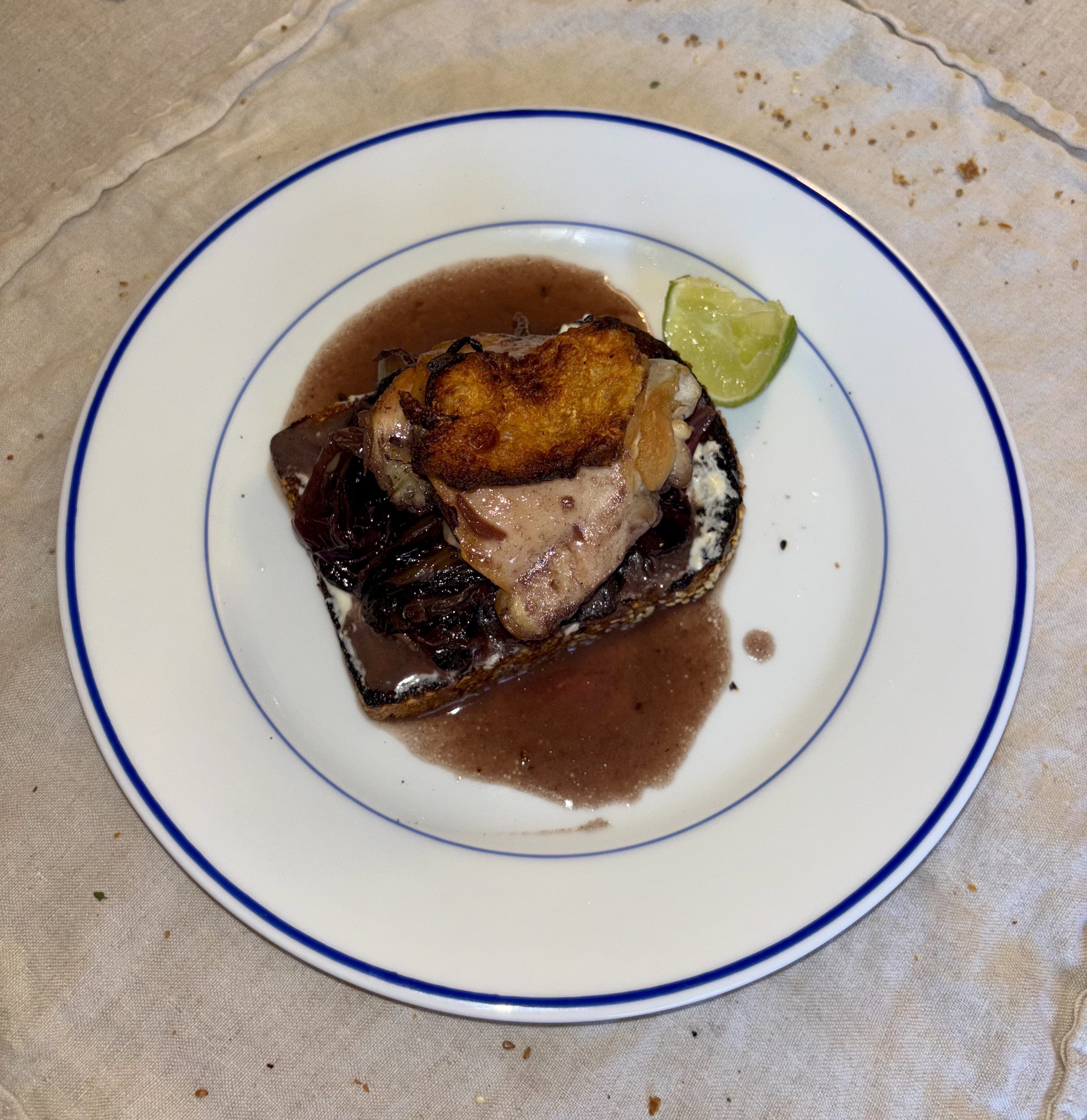
Not surprisingly, a winter recipe calls for a warming food, a chance to wrap our adrenal system with heat. Not just to cloak us with fever, but to trap it inside. Dylan says the goal of this recipe is to strengthen our kidneys, as this is related to matters of the heart, or our sadness.
I was fortified by the chance to center a recipe based on the convergence of salt and bitter, a combination to which I often gravitate. I immediately did what I always do with bitter greens (radichio, trevisio, indigo, castelfranco, I considered dandelion), which is marry them to anchovy. I use this flavor medium across the board in braises, salads and sauces, salty and bitter, not just for Chicken Toast. I was also told that blood colors are important this season, which is why I chose red wine, red onion, red lettuce, and dark chinese dates.
Braising is my method because I don’t like to work too hard when I’m cooking. The experience of cooking feels related to the experience of enjoying it, digesting it, living with the eating. As this recipe is about trapping and storing heat, I wanted to mimic that in this process.
Chicken toast is a complete meal, a singular dish to make for yourself or a friend. It’s comforting but a little bit strange.
Ingredients
4 chicken thighs, salted for an hour before cooking
Kosher salt and cracked pepper
4tbs neutral oil
2 sm red onion, cut in half, sliced
1 head garlic slivered across
2 garlic cloves, peeled (for rubbing on bread)
5 anchovy, minced
2 bay leaf
2 heads any red chicory (indigo, treviso, radicchio), pulled apart
2 cups wine
Fresh thyme
5 chinese date, pulled apart & pitted
2 tbs fish sauce
A scoop of butter
Creme fraiche
Lime squeeze
Olive oil
Sesame pullman bread, or walnut bread, any good bread to be fried
Instructions
Season chicken thighs on both sides with salt. Skin side up, let these sit for like an hour, maybe a paper towel underneath if you do those
Pour oil in the pan over medium-high. Once it is shimmering, add in chicken thighs skin side down. Please don’t touch these for at least like 7-10 minutes (set a timer), if they will not release autonomously from the bottom of the skillet after a little nudge, they are not browned enough yet. Once they are ready, take them out of the pan and let them sit on a plate.
Throw in red onions and toss around a bit. Add in anchovy, bay leaf, thyme. Throw in some more olive oil if it feels dry to prevent it all from getting too brown. Use a lid half off to steam onions and keep it all a little wet in my opinion.
Once the onions are thoroughly sweated, sort of clumping together on the bottom of the pan, add in the chicories. Toss those around a bit, pour the wine over, close the pan for 3 minutes or so. When you see wilting, throw in a pinch of salt, toss it all around again.
Eventually throw in the chicken thighs, filling up the shallow pan with red wine. Take care to keep the skin above the wine so it stays intact. If you wanna be fun, carefully take the skin off the chicken thigh and reserve it for frying later (as we have done in this film.)
Braise with lid 90% percent on, 10% off, which is how I make a lot of stuff, so just the smallest amount of steam comes out, without draining too much of your cooking liquid. This period of time is important for, of course, making the chicken come apart but also for fortifying the broth with all that flavor.
Halfway thru this process taste the cooking liquid, add in some fish sauce to balance the tannin of the chicories and red wine, see what it all needs and keep going until the 20 minutes has elapsed. Not too salty yet, as the broth will get richer as it cooks. Add some more water at any point if the liquid is getting too low. Keep it at the most even simmer. You want to hear low, steady whispers.
When the chicken is all said and done, about 25 minutes later, you should be able to pull it apart easily in the broth. Throw in a lump of butter and let the pot sit covered.
Cast iron skillet, sliced pullman loaf. Hot oil again, fry the thick piece of bread nicely on each side. Pull it out, rub with garlic clove, some salt, don’t miss any spots especially the edges.
Also fry the chicken skins in this oil, turning a couple times on each side, till it’s nice and crisp. This really makes a difference in a good way having a piece of brittle chicken skin on top of the braise.
Spread creme fraiche on the toast, and then directly pile on the braised chicories really high. Mount the chicken thigh over the bed of wilted greens and pour the red wine sauce over, till it pools around the bread. A little blood bath, but not so much that the bread loses itself. Add the crisped chicken skin on top, some more salt if needed, and a squeeze of lime.
- Alivia Bloch